The business context
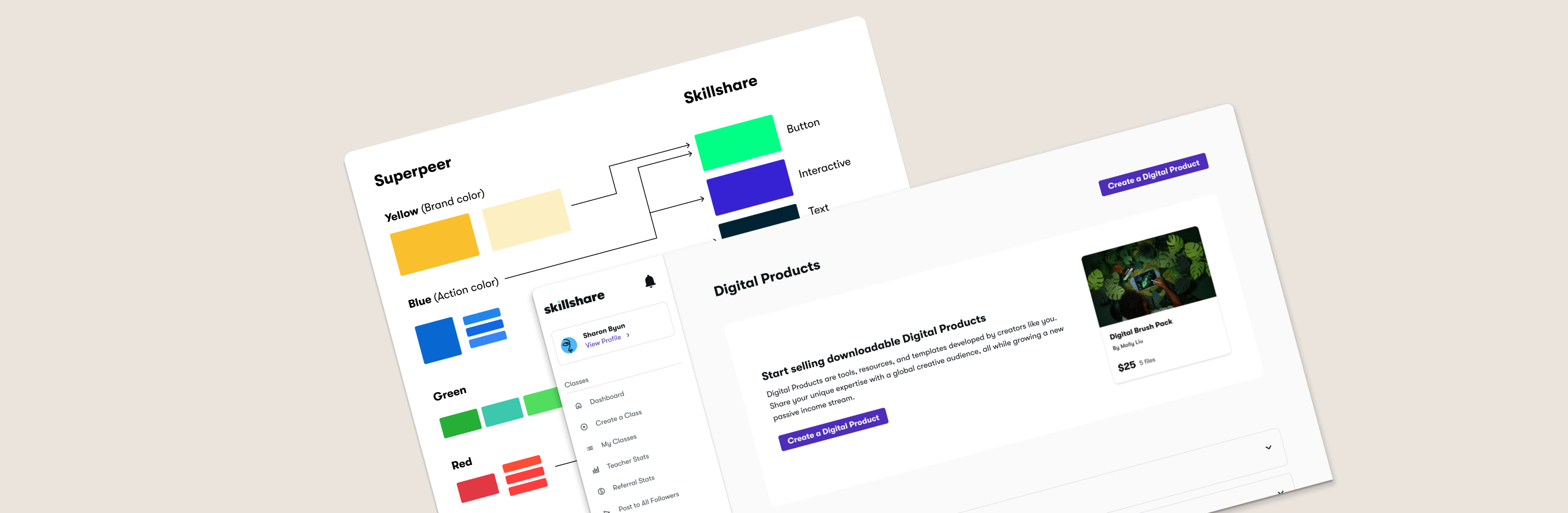
Skillshare acquired Superpeer, a live session and marketplace platform, and the directive was immediate: get the new revenue streams in front of teachers as fast as possible. What the directive did not come with was a plan for the teacher experience. Skillshare's teacher side ran on legacy monolith code that the company had no appetite to overhaul, and Superpeer was an entirely separate product with its own patterns, its own surfaces, and its own way of doing things.
The math was unforgiving. A full platform rebuild would have pushed revenue out by quarters. Shipping Superpeer as a bolted-on second product would have made teachers feel like they were running their business across two companies. The work was finding the path between those two failures.
The real challenge was direction, not code
Acquisitions make people anxious. Internal teams did not know where the company was heading, and everyone had an opinion about what the integration should be. Before any screen could be designed, someone had to turn that noise into a direction the whole organization could point at.
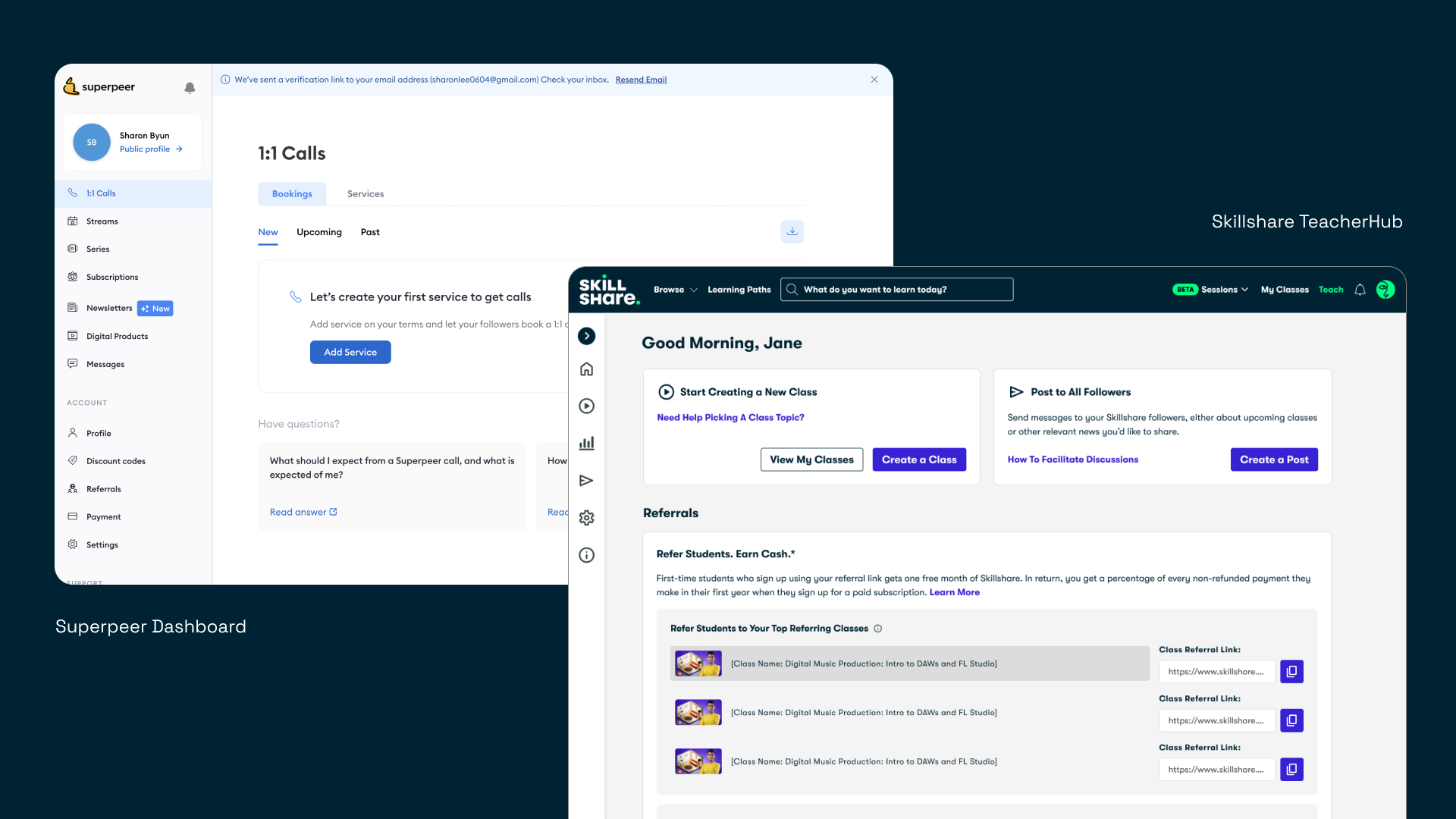
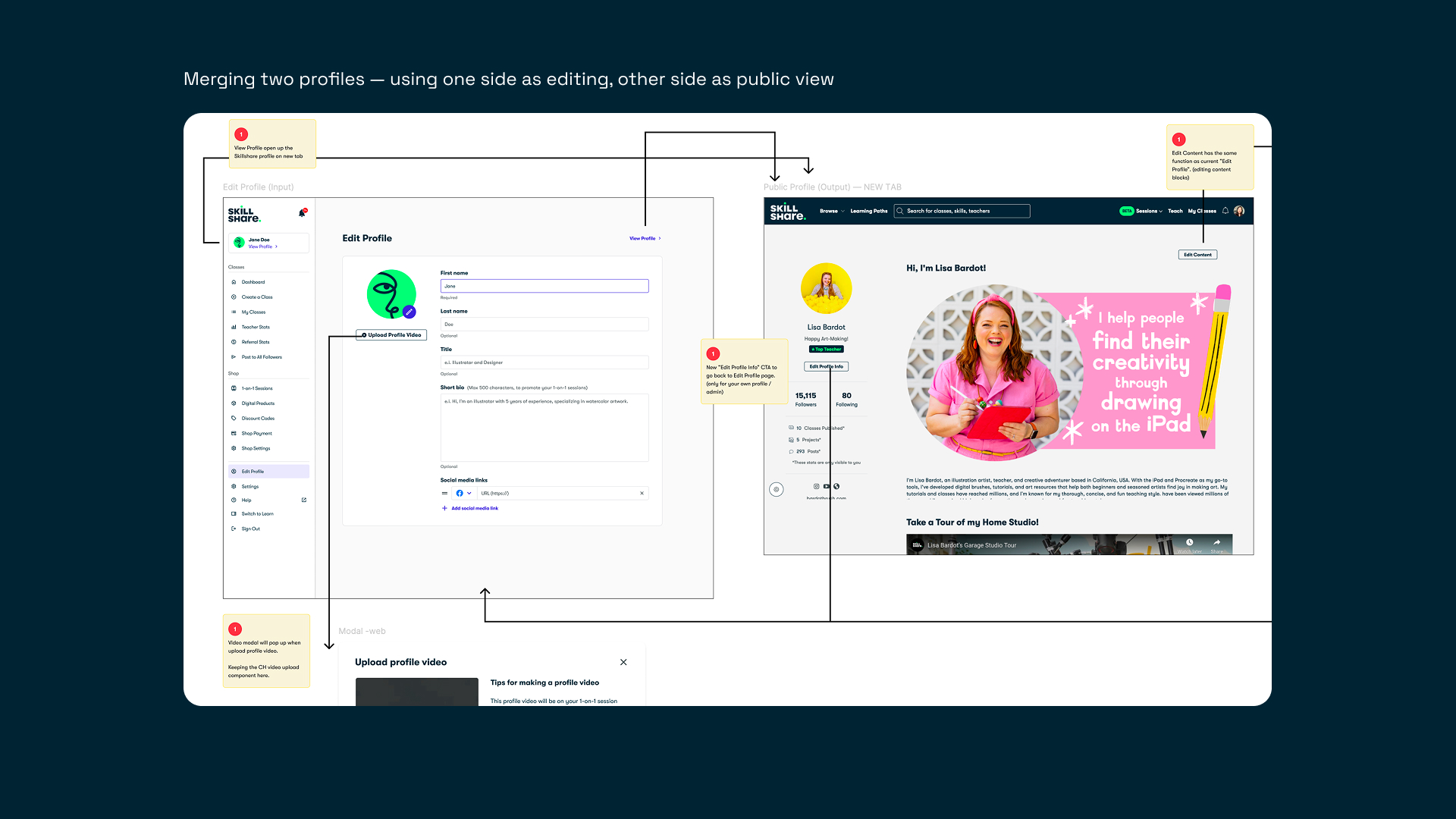
My PM and I took that on together, with a clean division of labor. The PM owned the acquisition strategy: which Superpeer surfaces would sunset and when, and the timeline for what came after. I owned the experience direction. I audited every action a teacher could take across three surfaces: Teacher Hub, the student-facing experience, and Superpeer. The audit exposed every overlap and collision, from two separate account creations to two payout systems to two competing notification streams. From it, I mapped the future-state sitemap for a single Creator Hub, then made the direction tangible with a working prototype of the unified experience.
The prototype is what ended the debate. Opinions about strategy are hard to reconcile. Reactions to a thing you can click are not.
The sunset timeline added a constraint most integrations do not have: the design could not be a single end state. As Superpeer surfaces turned off on schedule, the teacher experience had to hold together at every intermediate step, not just at the finish line.
I knew where it hurt before the project existed
One advantage compressed the timeline: I did not need a discovery phase to understand teachers. Years of working on the teacher side meant I had accumulated their pain points long before this project had a name. The teacher experience had been neglected for years, and I knew exactly where it was confusing, where it was outdated, and where new earning features would collide with old assumptions. The integration became the occasion to fix a neglected experience, not just to graft on new features.
Three key decisions
Embed, do not rebuild
We integrated Superpeer's surfaces into Skillshare through embedding rather than rebuilding them natively, keeping the monolith untouched and revenue on schedule. The tradeoff was real: less control over the embedded experience. The design work was making the seams invisible, with one navigation, one visual language, and no moment where a teacher's context tells them they crossed a platform boundary.
One navigation for the whole business
The easy IA would have mirrored the org chart: Skillshare features here, Superpeer features there. Teachers do not think in codebases. I organized the hub around the teacher's business: their classes, their newer ways to earn like 1-on-1 sessions and digital products, and their support, all in a single navigation with no section labeled Superpeer. Discoverability was the adoption strategy: a teacher exploring a new way to earn money finds it sitting naturally next to the ways they already earn.
Treat money as the trust surface
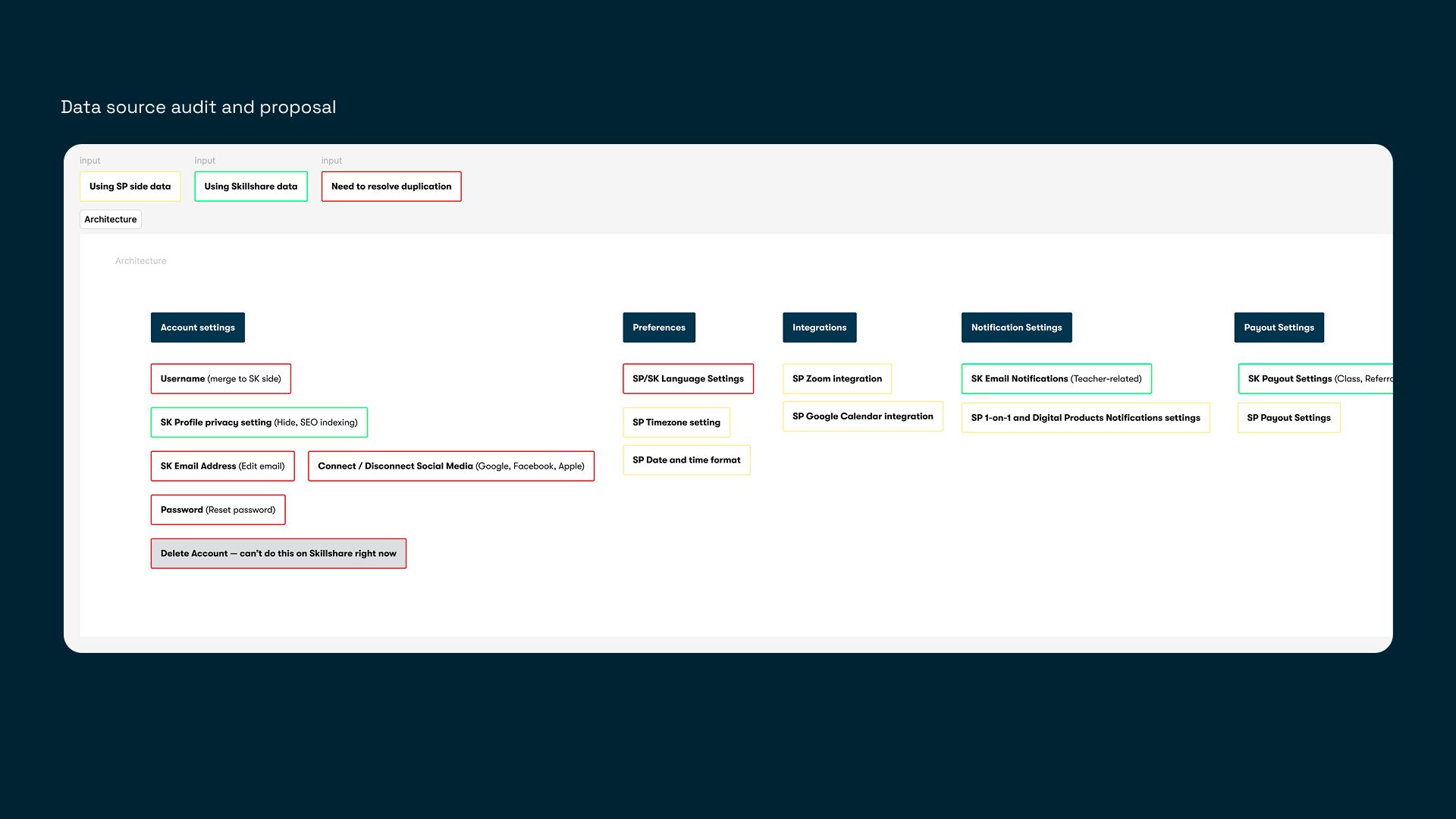
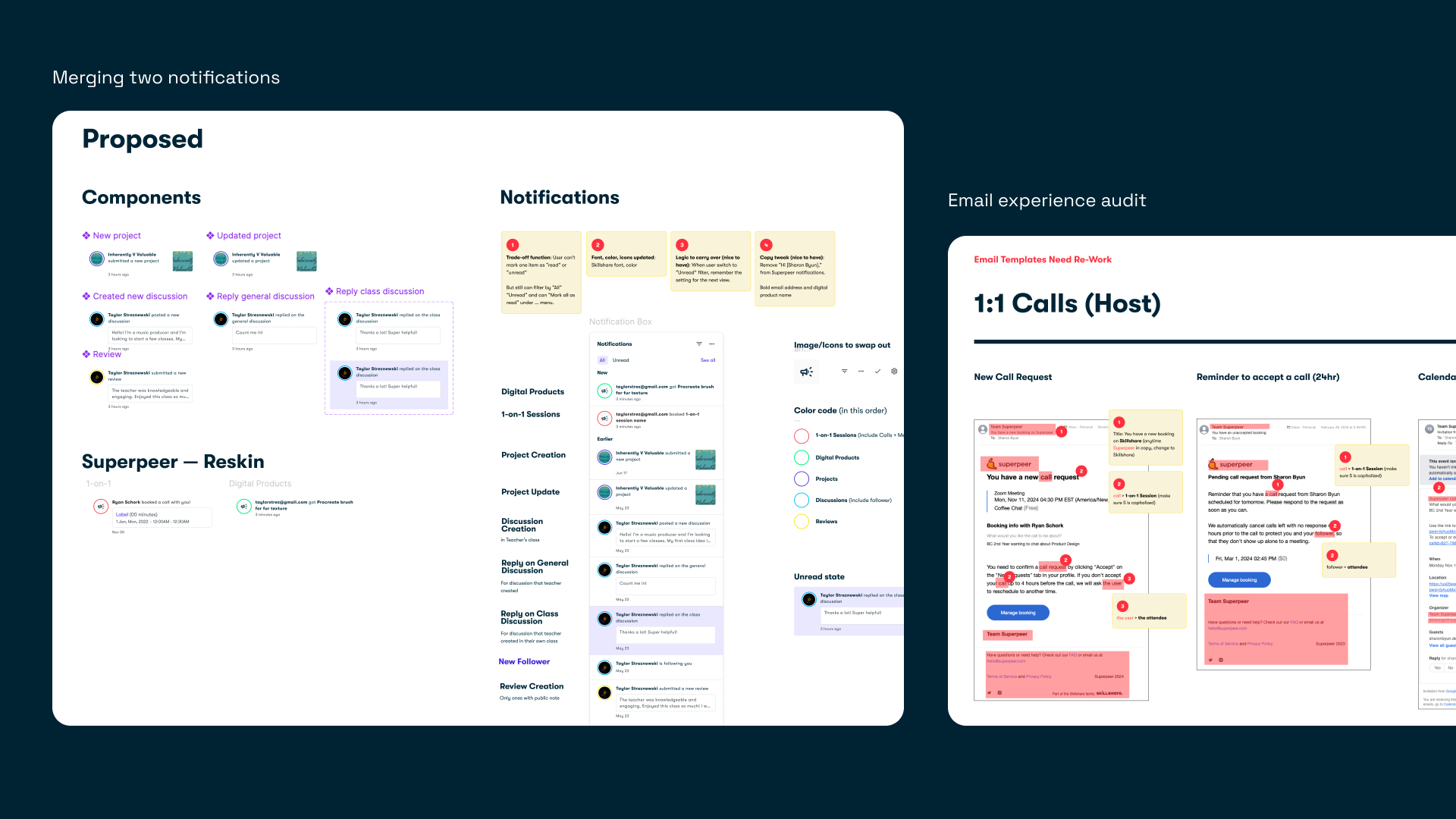
The audit's most sensitive overlaps were financial and account-level: two payout systems, two account settings, duplicated notifications. Confusion around money becomes distrust, and distrust in an earnings platform is fatal. Every overlap got an explicit resolution: merged into one where the systems allowed it, kept parallel but co-located and clearly named where the backends could not yet converge. Nothing was left ambiguous for the teacher to reconcile on their own.
Outcomes
The integration shipped without a platform rebuild, on the timeline the business needed. Teachers gained new ways to earn, including 1-on-1 sessions and digital products, inside the experience they already knew.
The metric I watched closest was the one we designed against: disruption. A neglected experience was restructured and a second platform was folded in, and teacher complaints stayed near zero through launch. For a change of this size, quiet is the win.
Digital products now listed by teachers
1-on-1 sessions now listed by teachers
What I took from this
The hardest constraint on this project was not the monolith. It was that a company full of smart people disagreed about where they were going. Screens did not resolve that; a direction did. My PM brought the strategy and the sequence. What design brought, and what only design could bring, was the picture everyone finally agreed to point at.
Skills & Methods